What Concrete Formwork Corner
H1: Precision Concrete Formwork Corners: Engineered for Structural Integrity & Aesthetic Edge Consistency
In modern cast-in-place concrete construction, the quality of a structure is often judged by its edges and junctions. Whether it is a high-rise core wall, an industrial retaining wall, or an architectural column, the corner is where formwork pressure peaks and where defects first appear. For international B2B buyers—contractors, formwork rental companies, and concrete subcontractors—selecting the right **concrete formwork corners** is not merely a component choice; it is a strategic decision affecting project speed, labor costs, and final finish quality.
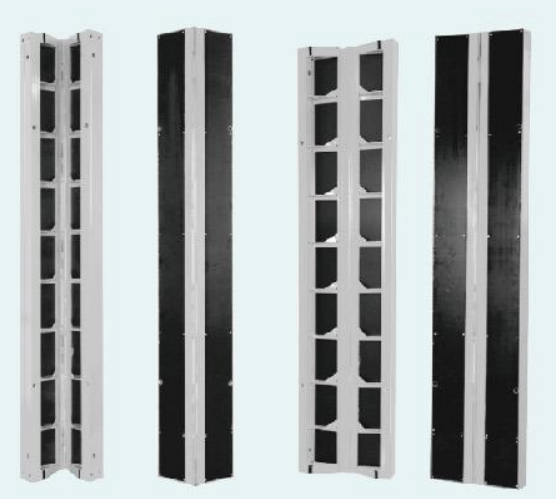
Concrete formwork corners are specialized mold components designed to shape and support freshly poured concrete at structural junctions. They ensure dimensional accuracy, structural integrity, and the formation of clean, durable, and aesthetically consistent edges. Available primarily in steel, aluminum, or high-strength plywood, these components accommodate standard 90° angles as well as hinged configurations for custom geometries, offering flexibility for both repetitive residential projects and complex infrastructure builds.
This technical overview provides global buyers with industry background, current market data, application processes, and answers to the most frequent procurement questions—helping you source corners that reduce rework and maximize formwork cycles.
H2: Industry Background & Market Drivers for Corner Formwork Systems
H3: The Global Push for Faster, Finisher-Ready Concrete
The global concrete formwork market, valued at approximately $6.2 billion in 2023, is projected to grow at a CAGR of 5.8% through 2030 (Allied Market Research). A key driver is the rising demand for *architectural concrete*—surfaces left exposed without plaster or cladding. In such applications, **inside formwork corners** and outside edges must achieve near-zero defects. Poorly aligned corner formwork leads to honeycombing, rounded edges, or dimensional drift, all of which require expensive manual grinding or patching.
Concurrently, labor shortages in North America and Europe are pushing contractors toward modular, precision-engineered systems. **Hinged concrete formwork corners** allow rapid setup and stripping, reducing on-site assembly time by up to 40% compared to custom plywood solutions. For rental formwork companies, durability (number of reuse cycles) has become the primary ROI metric, driving demand for galvanized steel and heavy-gauge aluminum corners.
H3: Regional Demand Patterns
- **Asia-Pacific:** High-volume residential and infrastructure projects favor low-cost steel corner formwork with standard 90° internal angles. However, a growing premium segment requires higher surface finish classes (Class A).
- **Middle East & Africa:** Mega projects (NEOM, Dubai Creek Tower) demand hinged corner systems for complex geometric transitions and high lateral pressure resistance (up to 80 kN/m²).
- **North America & Europe:** Emphasis on lightweight aluminum corners for reduced crane dependency, plus chamfered external corners to prevent edge spalling.
H2: Technical Deep Dive – Types of Corner Formwork & Application Processes
H3: Inside Corners (Internal Angles) – Precision at Junctions
Inside corners are employed at interior junctions—such as where two walls intersect, or at floor-to-wall and ceiling-to-wall interfaces—typically forming precise 90° internal angles. During casting, these corners experience bi-directional lateral pressure from fresh concrete. Without a rigid internal corner assembly, form panels can separate, causing bulging or fins.
**Application process:**
1. **Alignment:** Laser-checked vertical and horizontal datum lines.
2. **Clamping:** Inside corner units are bolted to adjacent panel frames using wedge or screw systems.
3. **Sealing:** A foam gasket or pre-applied sealant prevents grout leakage at the internal seam.
4. **Pouring:** Concrete is placed in lifts not exceeding 1.5 m per hour to avoid overpressure.
Modern **corner formwork systems** now integrate plastic or metal water bars for below-grade retaining walls, turning the corner into a continuous waterproofing plane.
H3: Outside Corners (External Angles) – Sharp, Robust & Spall-Free
Outside corners are installed at the external perimeters of walls or columns to produce sharp, robust, and dimensionally stable external edges. These are the most impact-prone areas during stripping and transportation. Premium external corners feature replaceable steel tip inserts or chamfer strips (25 x 25 mm) that create a beveled edge, eliminating sharp 90° corners that easily chip.
**Manufacturing note for B2B buyers:** High-quality steel external corners are roll-formed or press-braked from 3 mm to 6 mm thick S355JR steel, then hot-dip galvanized (minimum 85 µm coating) to resist alkaline concrete attack. Aluminum versions (6061-T6) offer weight savings of 60% but require thicker sections for equivalent strength.
H3: Hinged Configurations for Custom Geometries
Not all structures are orthogonal. Hinged concrete formwork corners use piano-type or pin hinges that allow angles from 60° to 120°, ideal for trapezoidal walls, polygonal columns, or curved architectural features. These hinged systems incorporate adjustable lockable stays to maintain the chosen angle during concrete placement. For custom geometries, hinged corners reduce dedicated inventory by 70% compared to fixed-angle alternatives.
H2: Common Applications Across Project Types
H3: Walls & Retaining Walls – Resisting High Lateral Pressures
In wall formwork, rigid or hinged corner assemblies are utilized to securely interlock adjoining form panels, effectively resisting high lateral pressures exerted by fresh concrete. At the base of a 4 m wall, pressure can exceed 70 kN/m². Corner connections are typically reinforced with diagonal braces or strongbacks. For seismic zones, corner tie-hole patterns must align with waler systems to transfer loads without deformation.
H3: Columns & Piers – Geometric Fidelity for Load-Bearing Elements
Column formwork corners facilitate the formation of crisp 90° corners—or controlled chamfers—on vertical load-bearing elements, ensuring geometric fidelity and surface quality. In high-rise construction, column corners are often cast several floors ahead of slab formwork. Therefore, corner units must be stackable, lightweight, and compatible with climbing systems. Chamfered outside corners not only improve safety (reduced injury from sharp edges) but also reduce corner stress concentration, lowering spalling risk during seismic events.
H2: Market Data & Trend Analysis for Strategic Sourcing
| Parameter | 2024 Benchmark | Trend (2025–2027) |
| **Reuse cycles (steel corners)** | 300–500 pours | Targeting 800+ with boron steel |
| **Reuse cycles (aluminum corners)** | 150–250 pours | Hybrid aluminum-steel edges emerging |
| **Acceptable corner tolerance** | ±3 mm per 3 m | Moving toward ±1.5 mm (architectural concrete) |
| **Setup time per corner (hinged vs. fixed)** | Fixed: 4 min / hinged: 2 min | Automation (magnetic corner alignment tools) |
**Key trend:** The shift from *component-based* corner procurement to *system-based* corner formwork families. Major contractors now demand that internal corners, external corners, and hinged adapters share the same panel connection interface (e.g., universal cone nuts or wedge bolt spacing of 150 mm). This reduces loose parts and improves rental utilization.
H2: Frequently Asked Questions (FAQs) by B2B Buyers
Q1: How do I calculate the required corner quantity for a large wall project?
**A:** For rectangular wall layouts, the number of **concrete formwork corners** equals the number of vertical edges. For example, a 50 m long x 3 m high wall has 4 vertical corner edges, but if the wall is poured in 10 m panels, you need 2 inside + 2 outside corners per panel. A practical rule: plan for one corner assembly per 15–20 m² of wall formwork. Always add 10–15% spare corners for splice positions and offsets.
Q2: What is the difference between a fixed 90° corner and a hinged corner in terms of concrete finish class?
**A:** Fixed 90° steel corners, when properly aligned, achieve the highest finish classes (Class A1 / SO 4) due to zero articulation under load. Hinged corners, despite being adjustable, may allow micro-movements (0.5–1 mm) if the locking mechanism is not fully tightened, leading to visible step marks. For exposed architectural concrete, choose fixed corners with precision-ground edges. For non-visible or painted surfaces, hinged corners are acceptable and offer greater geometry flexibility.
Q3: Can I mix aluminum external corners with steel panel fillers?
**A:** Technically yes, but avoid galvanic corrosion by using nylon or rubber isolators between dissimilar metals. Also, note that aluminum corners have lower modulus of elasticity (69 GPa vs. steel’s 200 GPa), so under equivalent pressure, an aluminum corner will deflect 3x more. Therefore, for high-pressure applications (walls >5 m height or heavy vibrating), stick to steel corner formwork. Aluminum is best for columns, low walls, or where crane capacity is limited.
Q4: How do I properly maintain corner formwork to maximize reuse cycles?
**A:** After each pour: (1) immediately scrape off concrete residue before full hardening; (2) never hammer directly on the corner edge—use a rubber mallet on the panel face; (3) check for deformation using a 1 m straightedge; (4) reapply release agent to the internal corner surface before storage. For steel corners, annual zinc touch-up on weld seams prevents rust creep. With this regimen, quality steel corners easily achieve 500–800 reuse cycles.
H2: Professional Call to Action for Global Buyers
Whether your portfolio includes high-rise residential towers, water treatment plants, or precast concrete yards, the corner is where formwork success or failure becomes visible. By choosing precision-engineered **concrete formwork corners**—with matched tolerances, durable coatings, and system-level compatibility—you reduce rework, improve edge aesthetics, and lower your cost per pour.
Ready to optimize your corner formwork inventory?
Request our 2025 technical catalogue with load charts, dimensional drawings, and 3D BIM files for all inside, outside, and hinged corner configurations. For volume buyers, we offer custom punching (hole patterns to match your existing panel systems) and mixed container orders (steel + aluminum).
Contact our B2B technical sales team** for a free corner consumption analysis based on your upcoming project schedule. Ask about our sample corner testing program—ship one corner to your site for a live pour trial before full commitment.
Precision corners. Consistent edges. Lower total forming cost.