Wall and Column Formwork Accessories
Mastering Vertical Concrete: The Critical Role of Wall and Column Formwork Accessories
Introduction: The Unseen Heroes of Concrete Construction
When people talk about concrete formwork, they usually think of the big stuff—like giant panels or fancy engineered systems. But here’s the thing: for international contractors and procurement folks, the *real* game-changers—the ones that make or break project speed, safety, and how smooth and clean the finished concrete looks—are actually the small, easy-to-overlook bits. Things like ties, clamps, bolts, and alignment tools—the accessories used for walls and columns. These little guys are what turn a loose pile of panels into a tight, rock-solid, high-performing formwork system.
As buildings get taller and designs get trickier, picking the right accessories isn’t just a “nice-to-have” anymore—it’s a make-or-break call. It directly affects how fast you can pour and strip forms, how much labor you’ll need, and whether your walls and columns end up straight, true, and on point. In this article, we’ll break it all down in plain English—not too technical, not too fluffy—so B2B buyers get the real-world insights and practical know-how they need to choose (and source) the right accessories, confidently.
Industry Background: Why Accessories Drive the Vertical Formwork Market
The global formwork market is worth over $6 billion a year—and demand for wall and column formwork accessories is booming. Why? Because high-rises, bridges, tunnels, and big industrial plants are going up faster than ever. And unlike flat slabs, vertical elements bring their own set of headaches: fresh concrete pushes *hard* against the forms (hello, hydrostatic pressure!), everything needs to line up *just right*, and safety is non-negotiable—nobody wants a blowout.
Here’s a sobering stat: nearly 60% of all formwork-related incidents happen because of accessory failures. No surprise, then, that smart contractors are moving away from “cheapest first” thinking—and shifting toward total cost of ownership. They’re betting on top-tier accessories that won’t quit after a few uses, but keep performing reliably for *hundreds* of pours. This mindset is catching on fast—especially across the Middle East, Southeast Asia, and North America.
Essential Wall & Column Formwork Accessories
A complete system comprises four key, interdependent component categories:
1. Formwork Ties (Tie Rods & Systems)
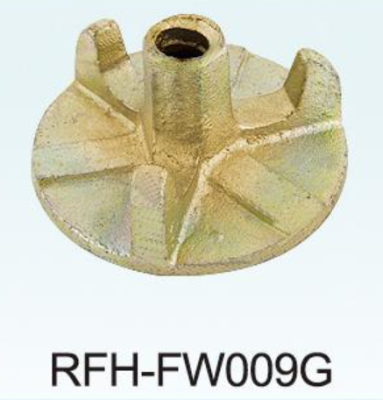
High-tensile steel rods that span the wall thickness, anchoring inner and outer formwork faces to resist lateral concrete pressure. Modern options include tapered ties (for small, repairable holes) and flat ties (for smooth finishes). Heavy-duty variants offer load capacities >50 kN.
2. Clamps & Corner Locking Systems
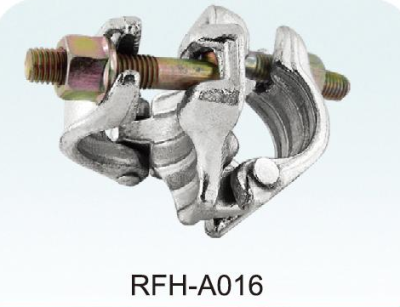
Hinged or telescoping column clamps and corner accessories ensure precise 90° alignment and rigidity—preventing bulging, misalignment, and costly rework.
3. Anchors, Spreaders & Alignment Devices
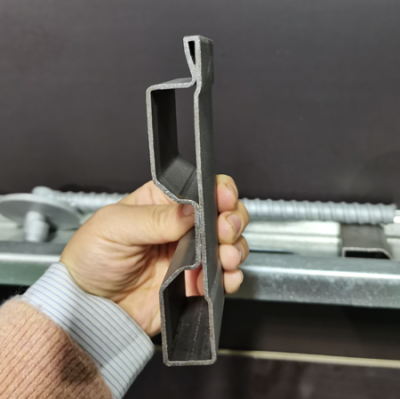
Internal spreaders maintain uniform wall thickness; walers and strongbacks transfer sheathing loads to the tie system; kicker blocks and base anchors secure the formwork bottom to the prior pour, preventing displacement during concreting.
4. Hardware & Connection Elements
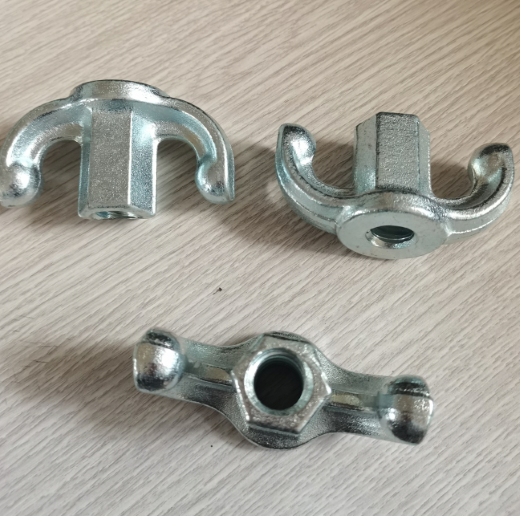
Couplers, pins, wedges, adjustable swivel nuts, and pull-out bolts enable fast, reliable assembly and disassembly—directly boosting labor efficiency.
Manufacturing & Application: Ensuring Performance
Quality Manufacturing Standards
Premium accessories are produced under strict controls:
• Material Selection: High-grade carbon steel (e.g., Grade 8.8/10.9 bolts) or ductile iron for clamps.
Heat Treatment & Surface Finishing: Components undergo heat treatment for strength, followed by galvanization (hot-dip or electro) or zinc plating for corrosion resistance—essential for aggressive concrete environments.
Precision Threading: Tie rods require consistent thread profiles to ensure smooth engagement with wing nuts and couplers.
Onsite Application Brief
Setup: Formwork panels are positioned around the column or along the wall line.
Tie Placement: Tie rods are inserted through pre-drilled holes in the panels (or through cone sleeves).
Clamping: Column clamps or walers are placed at specified vertical intervals (e.g., every 600mm) and tightened.
Alignment: Adjustable props or turnbuckles fine-tune plumbness and position.
Concrete Pouring: The assembly withstands full hydrostatic pressure.
Stripping: After curing, ties are removed (or the exposed ends are snapped/cut) and holes are patched.
Trends & Technology: The Future of Formwork Accessories
Two major trends are reshaping the formwork accessories market. First, standardization and modularity are reducing the variety of small parts needed on site, with suppliers developing multi-functional components that work across different panel systems. Second, digital tracking (using RFID or QR codes embedded in accessory boxes) is improving inventory management and life-cycle analysis. Additionally, there is a growing demand for quick-release systems that accelerate stripping, directly cutting cycle times for high-speed construction projects.
Frequently Asked Questions (FAQ)
Q1: How do I select the correct formwork tie for a given wall height and pour rate?
A: The tie's load rating must exceed the maximum concrete lateral pressure, which is determined by wall height, pour rate, concrete temperature, and mix design. Standard ties suit moderate pours (up to 3m height). For rapid pours or tall walls (e.g., 5m+), specify high-strength tie rods with reduced spacing. Reputable suppliers provide load charts; always consult them.
Q2: What is the typical reuse lifespan of galvanized formwork accessories?
A: With proper cleaning and storage, hot-dip galvanized ties and clamps can last 50-100 cycles. Electro-galvanized components offer lower corrosion resistance (30-50 cycles). For harsh environments (marine, high humidity), stainless steel or heavy-duty polymer-coated accessories are recommended.
Q3: Can accessories from different manufacturers be mixed safely?
A: Generally not recommended. Thread pitches, cone dimensions, and load capacities vary significantly. Mixed systems risk improper fit, load concentration, and potential failure. Always source formwork accessories from a single, compatible system or obtain explicit engineering approval for intermixing.
Q4: How do I prevent concrete leakage at tie holes or panel joints?
A: Use formwork gaskets or cones with integrated seals. Ensure ties are properly tightened to compress gaskets. For panel joints, proper alignment and consistent clamp pressure are essential. For high-visibility surfaces, consider tapered formwork ties combined with cone seal systems to minimize patching.
Conclusion & Strategic Call to Action
The reliability, safety, and speed of any vertical concrete project are directly tied to the quality of its concrete wall and column formwork accessories. For international B2B buyers, prioritizing certified, precision-engineered components from established manufacturers reduces on-site risk, lowers long-term costs, and ensures consistent concrete finishes.
Professional Call to Action:
To enhance your next vertical concrete project, request a comprehensive accessory compatibility assessment from a specialized supplier. Provide your typical wall/column dimensions, pour rates, and expected reuse cycles to receive a tailored component specification and load calculation sheet. Additionally, invest in operator training for proper accessory installation and maintenance—it delivers the fastest return on investment in formwork safety and productivity.