
 Español
 Portugues
 Français
 العربية
Ultra-Light Multi Formwork
Ultra-Light Multi Formwork is a modern construction solution designed to improve efficiency, reduce labor intensity, and provide greater flexibility on building sites. It is engineered to support a wide range of concrete forming applications while remaining significantly lighter than traditional formwork systems. Because of its reduced weight, it is easier to handle, transport, and assemble, making it especially useful in projects where speed, safety, and adaptability are important.One of the main advantages of Ultra-Light Multi Formwork is its versatility. It can be used for walls, slabs, columns, beams, and other structural elements, depending on the project requirements. This multi-purpose function helps contractors simplify site logistics because fewer formwork types need to be stored and managed. The system is also designed for repeated use, allowing it to be applied across multiple construction stages with consistent performance.The lightweight nature of the system brings major practical benefits. Workers can move and position the panels without requiring heavy lifting equipment in many cases, which helps reduce dependence on machinery and lowers overall operating costs. Faster assembly and dismantling also contribute to shorter construction cycles. In busy projects, this can lead to improved scheduling and quicker completion times. In addition, easier handling can reduce physical strain on workers and support a safer work environment.Ultra-Light Multi Formwork is typically manufactured with durable materials that balance strength and portability. The structure is built to withstand the pressure of wet concrete while maintaining dimensional stability and surface quality. This helps ensure accurate shaping and smooth finishes on the finished concrete surface. A reliable formwork system also reduces the likelihood of leakage, misalignment, or deformation during pouring, which can improve the final quality of the structure.Another important feature is its adaptability to different site conditions. It can often be configured for standard and non-standard layouts, making it suitable for residential, commercial, and infrastructure projects. Whether used in repetitive mass housing or more complex architectural designs, the system offers a practical solution for modern construction demands. Its modular design can also make planning and replacement easier, since damaged parts may be identified and serviced without replacing the entire system.In terms of sustainability, a reusable and lightweight formwork system can contribute to more efficient material use and reduced waste. By minimizing waste generation and improving productivity, it supports more responsible construction practices. The long service life of the system can further enhance its environmental and economic value.Overall, Ultra-Light Multi Formwork combines convenience, strength, and flexibility in one efficient system. It helps contractors improve productivity, reduce labor demands, and achieve high-quality concrete results. For projects that require speed, adaptability, and reliable performance, it offers a practical and cost-effective forming solution.
Products
Category:
Ultra-Light Multi Formwork
-
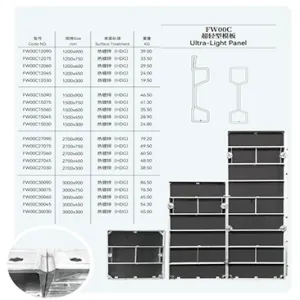
Ultra-Light Multi Formwork
Category: Ultra-Light Multi FormworkBrowse number: 27Number:Release time: 2026-09-28 18:47:08Ultra-Light Multi Formwork is a modern modular construction solution designed for faster installation, easy handling, and efficient concrete forming. Made with lightweight yet durable materials, this formwork system helps reduce labor costs, improve construction efficiency, and provide reliable performance for residential, commercial, and infrastructure projects requiring flexible and reusable solutions.
News
Category:
-
[Company News]Loading Containers and Delivery
2026-09-28 19:18:59
Case
Category:
No search results found!
Video
Category:
No search results found!
Download
Category:
No search results found!
Job
Category:
No search results found!
Featured Products
-
NEWS
Ultra-Light Multi Formwork
Learn more



 Phone
Phone